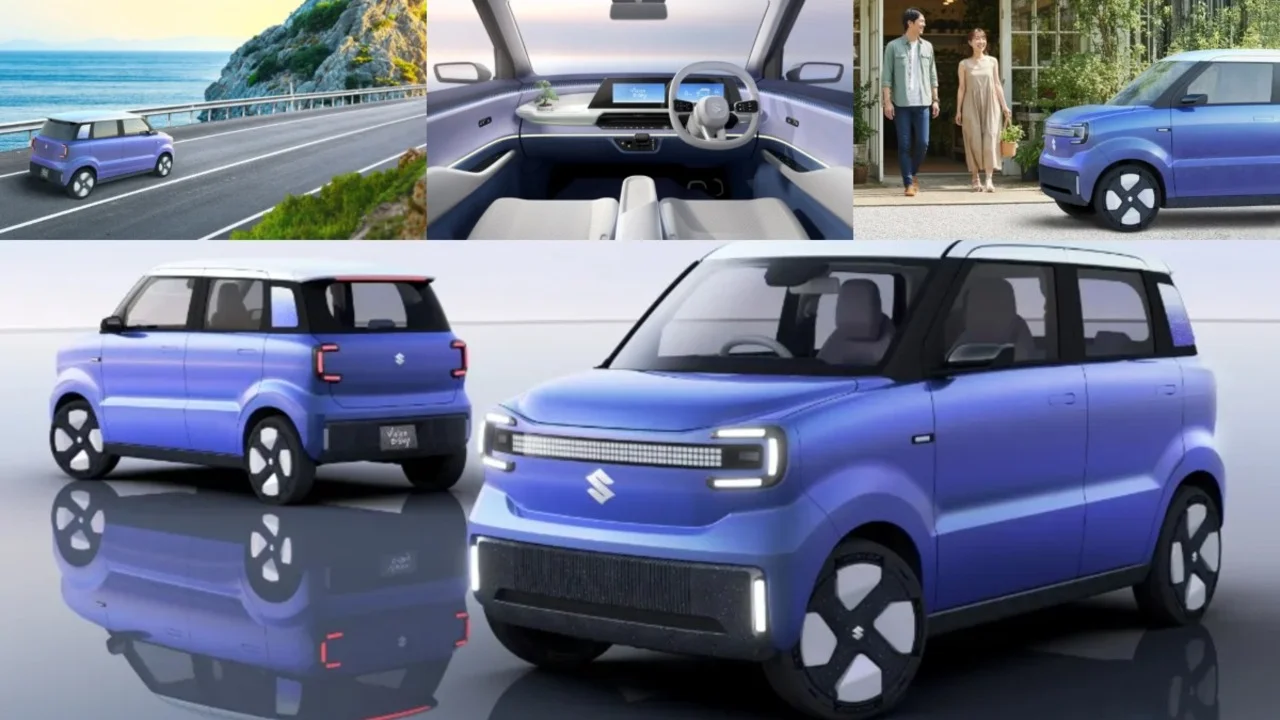
I’m excited to tell you about the Suzuki Vision e-Sky, Suzuki’s new compact electric minicar that promises an efficient urban drive and a claimed range of over 270 km. I looked through the latest reports from the Japan Mobility Show and other outlets to bring you the key facts, numbers, and what this car could mean for daily drivers.
What is the Suzuki Vision e-Sky?
The Suzuki Vision e-Sky is a small battery-electric concept Suzuki unveiled in early October 2025. It’s built to meet kei‑car packaging and shows what Suzuki says is a near-production small EV. You can think of it as a city car for short trips, commuting, and shopping. Suzuki presented it to the public at the Japan Mobility Show 2025 (Oct 31–Nov 9, 2025), where they described its role in a wider multi-pathway carbon strategy.
Design, size, and interior highlights
The Vision e-Sky follows the compact kei format: short front hood, a floating roof effect from blacked-out pillars, and clean urban styling. The exterior uses C-shaped LED daytime running lights and an illuminated grille to give it a modern look. Inside, Suzuki showed a simple but tech-forward cabin with dual digital screens, a “squircle” steering wheel, a floating dashboard, and ambient lighting. These touches suggest Suzuki is aiming for a practical but pleasant city interior.
Key design points you’ll notice:
- Compact footprint for tight city parking
- Flexible seating for four with smart packaging
- Digital controls that feel production-ready
Range, battery and efficiency — the numbers
Suzuki claims the Vision e-Sky can drive over 270 km on a single charge. Reported details show the concept uses a relatively small battery — roughly 20–25 kWh — and achieves that range through careful efficiency and light packaging. That makes the e-Sky interesting: it aims to give you useful range without the cost and weight of a large battery.
| Specification | Detail |
|---|---|
| Claimed driving range | Over 270 km |
| Battery capacity (reported) | ~20–25 kWh |
| Dimensions (approx.) | 3,395 mm L × 1,475 mm W × 1,625 mm H |
| Seating | 4 seats, flexible interior |
| Public debut | Early Oct 2025; Japan Mobility Show Oct 31–Nov 9, 2025 |
| Production target | Fiscal 2026 (Apr 1, 2026 – Mar 31, 2027) |
This balance of a small battery and long range is possible because the Vision e-Sky focuses on low weight, efficient aerodynamics for a minicar, and optimized powertrain control. Suzuki is positioning it as an affordable, efficient city EV rather than a long-range highway car.
How the Vision e-Sky works in everyday life
Let’s put the range into a simple example. If you commute 30 km round-trip each day, a driving range of 270 km would cover nine days without recharging. Even with real-world factors like heating or heavy traffic, you’d likely get a full week of commuting between charges. That makes the car very convenient for city life.
Another example: a weekend day trip of 100 km and errands around town would still leave you with a comfortable buffer. With a ~20–25 kWh battery, you also get shorter charging times compared with a big battery pack — helpful if you only have access to slower chargers at home or at work.
Case study-style point: Small batteries with high efficiency are a practical choice for city drivers in Japan and India, where most daily trips are under 50 km. Suzuki’s plan to roll out a Maruti-branded version in India later fits that use case. This is a car designed for predictable, repeatable trips — not long cross-country travel.
Production timeline, markets, and Suzuki’s strategy
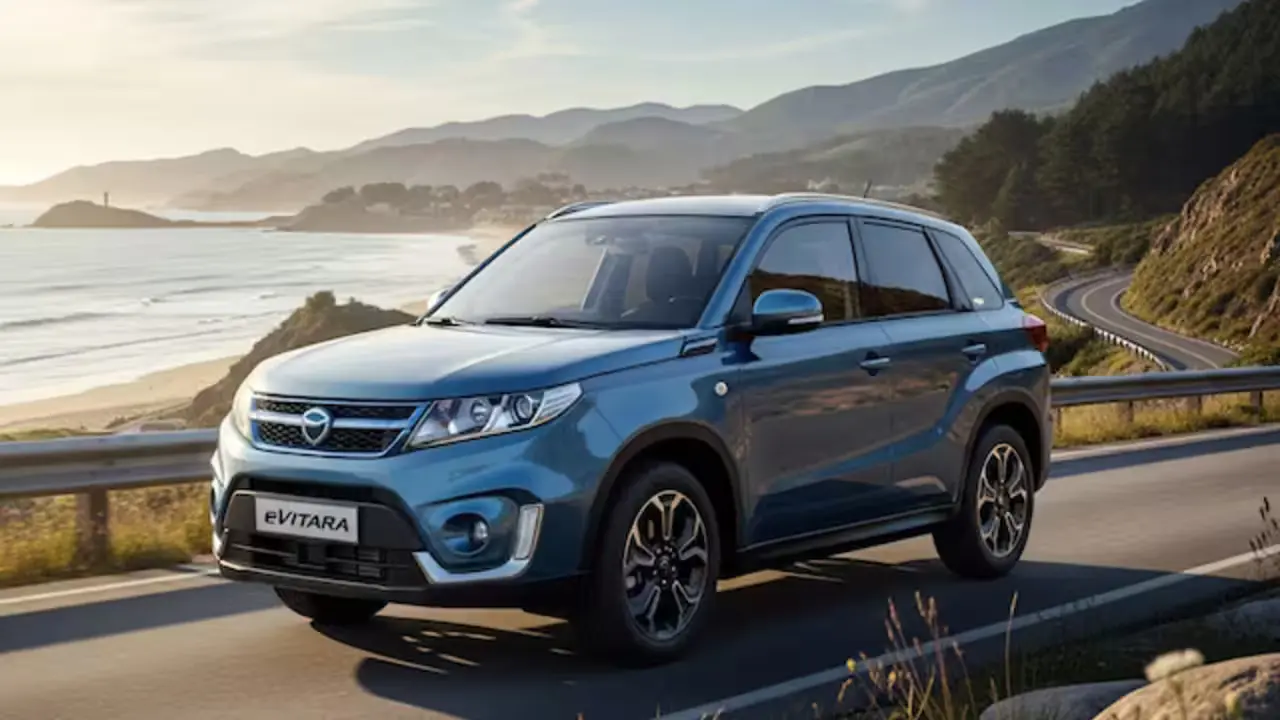
Suzuki says it aims to commercialize the Vision e-Sky in Japan in fiscal 2026 (Apr 2026–Mar 2027). The first market focus will be the Japanese kei / domestic market, with a Maruti-branded twin expected for India later. The Vision e-Sky sits alongside other Suzuki electrified projects, like the e-Vitara and small electric vans shown as concepts developed with partner companies.
Why this matters: Suzuki’s approach is what the company calls a “multi-pathway” carbon strategy. They are not betting on one single type of electric system. Instead, they plan a range of small EVs, hybrids, and electrified vans to match different markets and price points. The Vision e-Sky fits the affordable city EV slot — small battery, high efficiency, and low running cost.
What to watch and potential trade-offs
I’m excited about the idea, but there are trade-offs to consider. A 20–25 kWh battery keeps costs down and reduces weight, but it means less flexibility for long trips. Expect the Vision e-Sky to be best for urban drivers and short weekend drives. Real-world range will vary by weather, load, and driving style.
Also, remember this is a concept that Suzuki says previews a near-production car. Some styling and interior details may change before sales begin. We’ll watch for final specs, pricing, and official range tests closer to the production launch in fiscal 2026.
Also Read: Mahindra BE 6 unveiled as the most affordable electric SUV with 682 km range
Final Thoughts
In short, the Suzuki Vision e-Sky gives us a clear picture of Suzuki’s take on the small city EV. It promises over 270 km of range from a small ~20–25 kWh battery, smart packaging for four people, and a design focused on daily urban life. Suzuki plans to move to production in fiscal 2026 with a focus on Japan first, and an Indian version later.
If you live in a city and your typical daily driving is short, the Vision e-Sky looks like a practical and affordable electric option. We’ll keep an eye on final specs, real-world tests, and pricing as Suzuki moves from concept to production. If you want, I can pull direct quotes from Suzuki’s show notes or make a short comparison showing range per kWh versus other city EVs — just tell me which cars you’d like compared.